
What pages does a small business website need?
The five essential pages, useful extras and a pre-launch checklist — a practical guide to planning a small business website.
Read articleWebsites
Plenty of small businesses run entirely from Instagram — and some do very well. So is a website still worth it? Here’s an honest look at what each one does best.
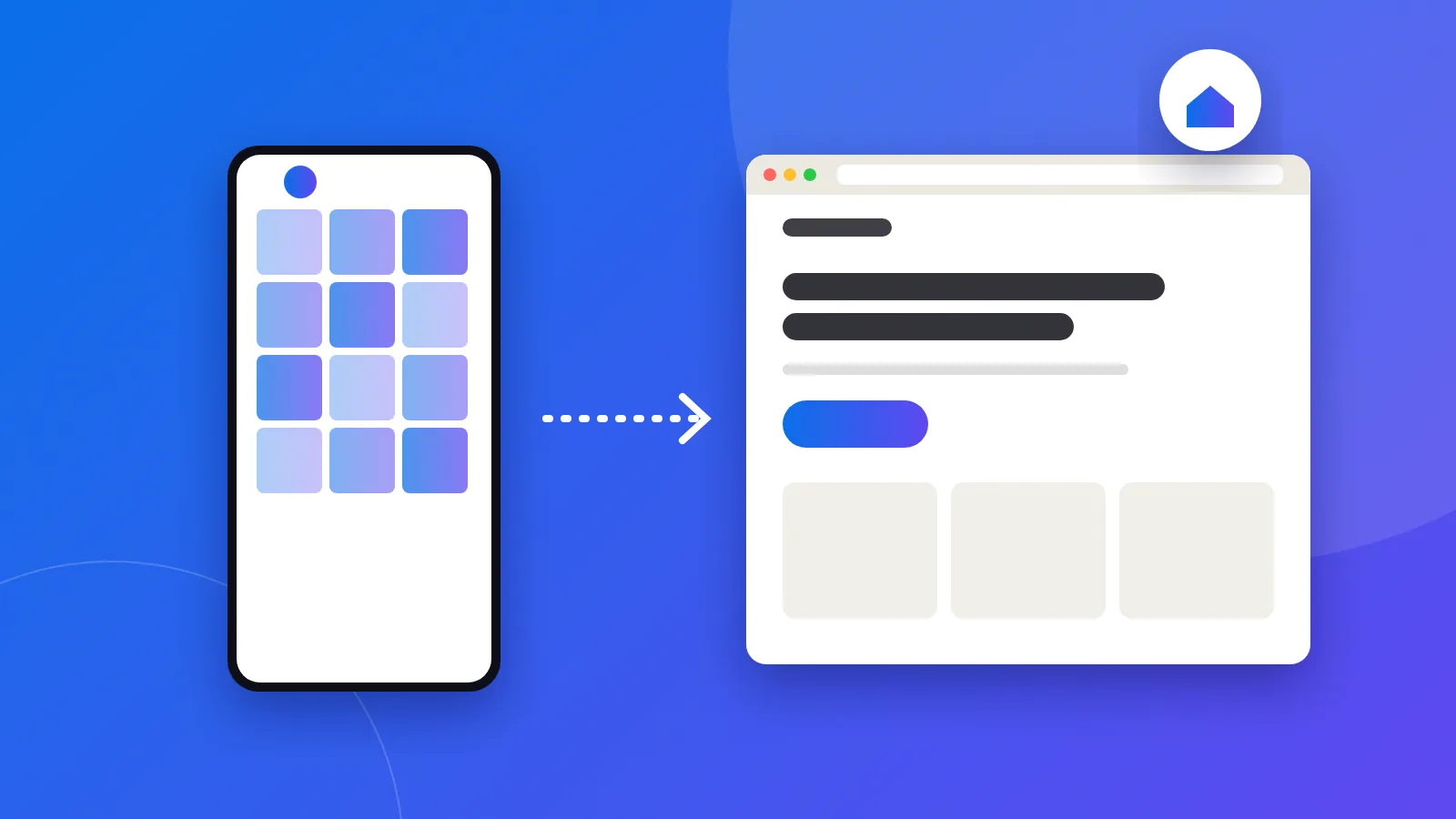
If Instagram is bringing you customers, keep using it — it’s one of the best places to be discovered. But Instagram and a website do different jobs. Instagram helps people notice you. A website helps them trust you, understand exactly what you offer and take the next step. For most small businesses that want to grow beyond friends, followers and word of mouth, having both works better than having either one alone.
Those are real strengths. The problem is what happens next.
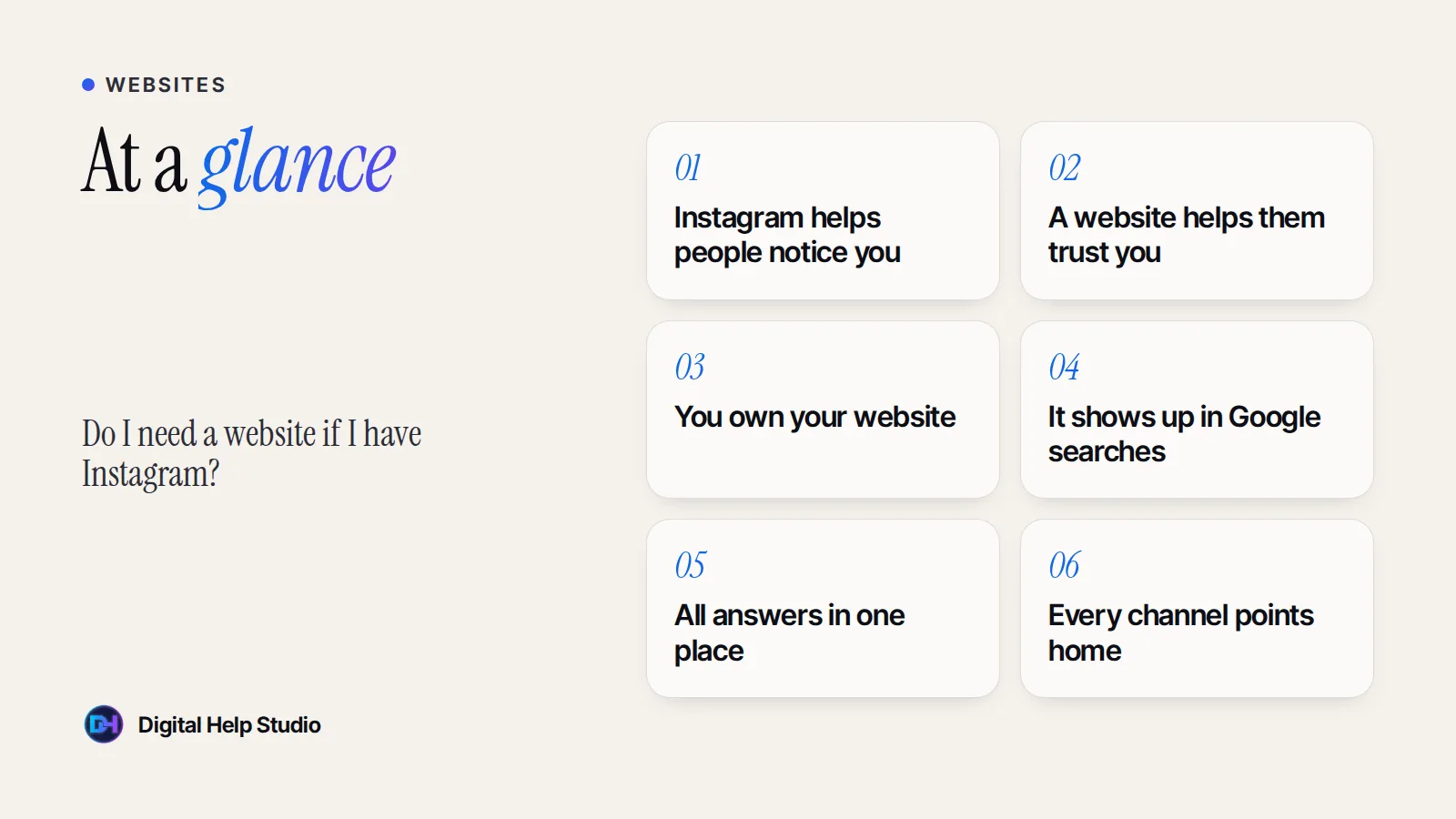
Your Instagram account lives on someone else’s platform, under someone else’s rules. Accounts can be restricted, hacked or disabled, and changes to the algorithm can reduce how many followers see your posts. Your website and domain are yours. Whatever happens on social media, customers can still find you.
Many customers start with Google, not Instagram: “wedding photographer near me”, “bookkeeper for small business”, “cake shop in [town]”. A website with clear service pages gives search engines something to show. An Instagram grid rarely answers those searches well.
What do you offer? Where are you? What are your hours? How do I book? On Instagram, those answers are scattered across highlights, captions and old posts. A website puts them in one clear, organised place — so people don’t have to message you just to find the basics.
Especially for new or overseas customers, a professional website is a signal that you are a real, serious business. It is also what many people expect before they pay a deposit, sign a contract or recommend you to someone else.
Your website becomes the link in your Instagram bio, the address on your Google Business Profile, the destination for your ads and the place your email signature points to. Every channel sends people to the same, well-designed home.
A website isn’t always the first priority. You might reasonably wait if:
If none of those apply, a simple, well-made website is usually one of the most useful investments a small business can make.
You don’t need dozens of pages. Most small businesses can start with one to five: a home page, a services page, an about page, a gallery or work page, and a contact page. I’ve written a separate guide on exactly what to put on each page.
If you’re unsure whether a website is worth it, see what yours could look like first. At Digital Help Studio, I build a free personalised demo using your business details — often your Instagram page is enough to start. You only pay if you decide to go ahead.
This guide is general information, not a guarantee of results. Every business and market is different.
Custom, hand-coded websites and landing pages for small businesses, starting with a free personalised demo.
See the service
Brijaditya Sharma is the founder of Digital Help Studio. After nine years in-house handling content distribution for an Indian brand, he now builds websites and runs digital marketing for small businesses worldwide. Connect on LinkedIn.
A link-in-bio page is better than nothing, but it is usually a list of links rather than a real explanation of your business. It rarely helps you appear in search results or build the same level of trust.
No — they work best together. Keep posting on Instagram for discovery, and use your website as the place you send people when they’re ready to learn more or get in touch.
Often between one and five. A single well-planned landing page can be enough for a very focused business.
Keep reading
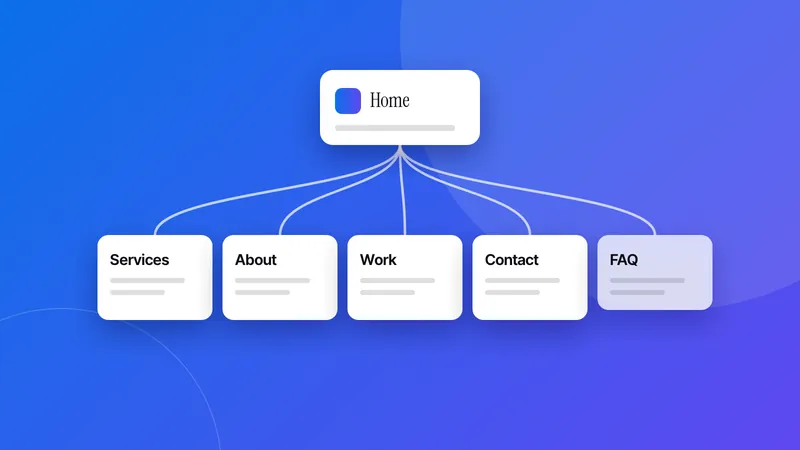
The five essential pages, useful extras and a pre-launch checklist — a practical guide to planning a small business website.
Read article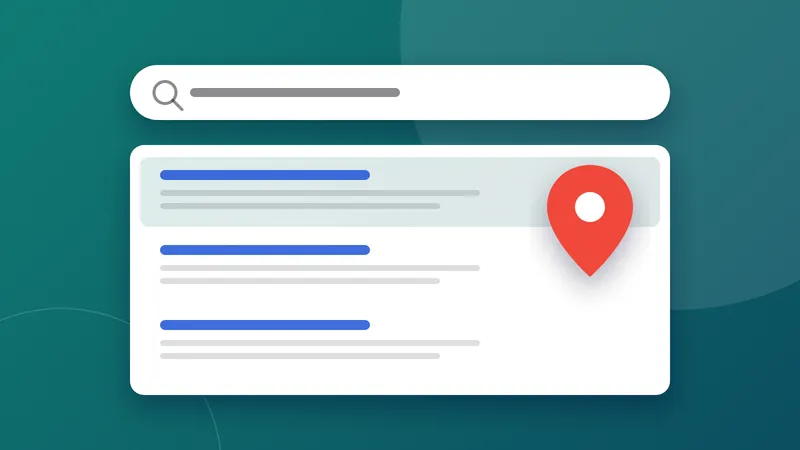
Eight practical steps to help nearby customers find your business on Google and Google Maps — from your Business Profile to honest reviews.
Read article
Search intent vs discovery: how Google and Meta ads differ, which suits your business, and what to prepare before spending anything.
Read articleYour next step
Send me your business details or your Instagram link. I’ll build a free, personalised website demo — no payment, no obligation.